NET fone Via Embratel
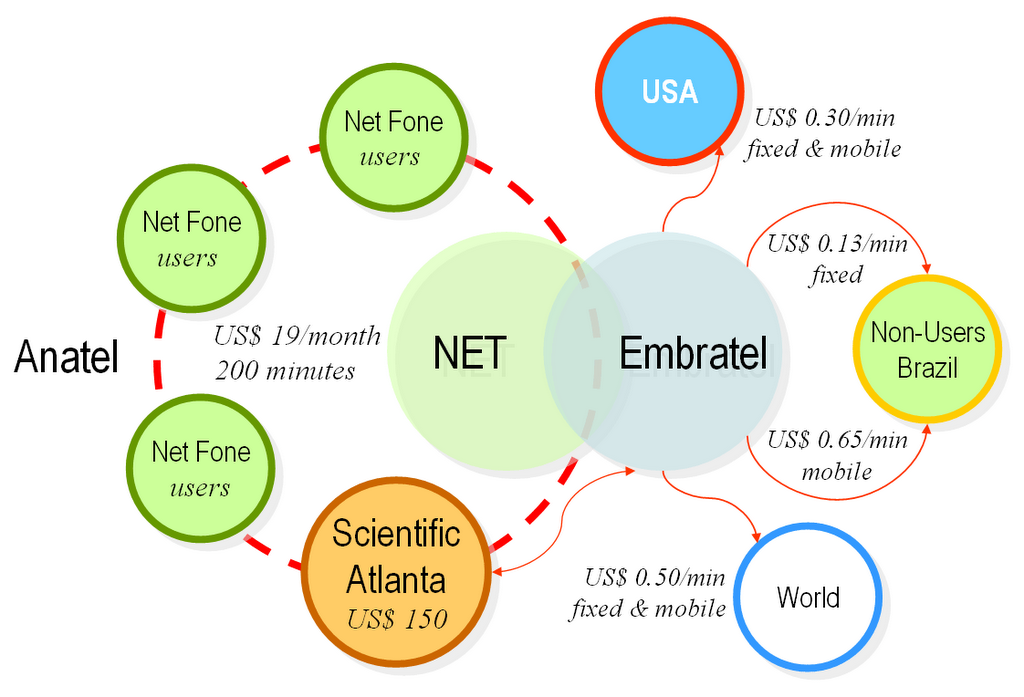 Embratel1 (Public, NYSE:EMT), in partnership with NET2 (Public, NASDAQ:NETC), is launching in Brazil an international trend: Triple Play, a combination of services that adds a lot more convenience to home telecom services.
 It is about 3 services over one single cable access: Broadband Internet + TV + Wireline PHone. The Scientific-Atlanta3 AllStar DPX2203 equipment is leased by Embratel on a loan for use basis and is delivered, installed and tested by NET.
No special phone set is required. Any set (DTMF standard- tone dial-up) can be used, including cordless phones. The calls are placed from this phone set, and the user do not need to use computer or access the Internet to call.
With NET fone Via Embratel the user can place local, long distance domestic (DDD) and international (IDD) calls to wireline and cell phones. The value of the monthly exemption can be used with any type of local , long distance domestic (DDD) and international (IDD) calling over the 21*, to wireline and cell phones. If the monthly consumption exceeds the exemption, rates for the exceeding calls are charged to the bill.
[1] Embratel Participacoes S.A. (Embratel Holdings) is a telecommunications services provider, operating domestic and international long-distance, data communications and local services. The Company is a provider of data and Internet services in Brazil. Its data transmission network, which incorporates fiber optic, digital microwave, satellite and copper transmission technology, allows the Company to provide a range of broadband data services to a client base.
[2] Net Servicos de Comunicacao S.A (Net Servicos) is a pay-television operator in Latin America. As of December 31, 2005, the Company had approximately 1.5 million connected subscribers in 44 cities in Brazil, including Sao Paulo and Rio de Janeiro. It is also a provider of high-speed cable modem Internet access through its NET Virtua service, which had approximately 367,000 subscribers as of December 31, 2005.
[3] Scientific-Atlanta is one of the largest makers of set-top boxes used by cable subscribers to receive TV programming and interactive online services such as movies-on-demand, e-mail, and Web connection. Although set-top boxes account for a large portion of sales, the company also makes digital video recorders (DVRs), cable modems, and network transmission and distribution equipment (digital video compression products, multiplexers, and signal encoders/decoders) used in the central offices of broadcasters. In early 2006 Scientific-Atlanta was acquired by Cisco Systems for about $6.9 billion.
Internet Television Broadcasting
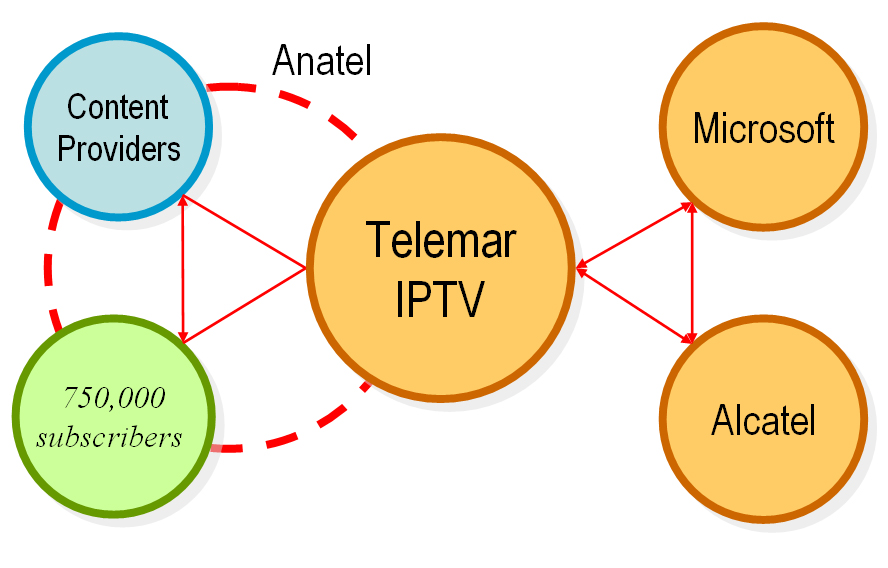
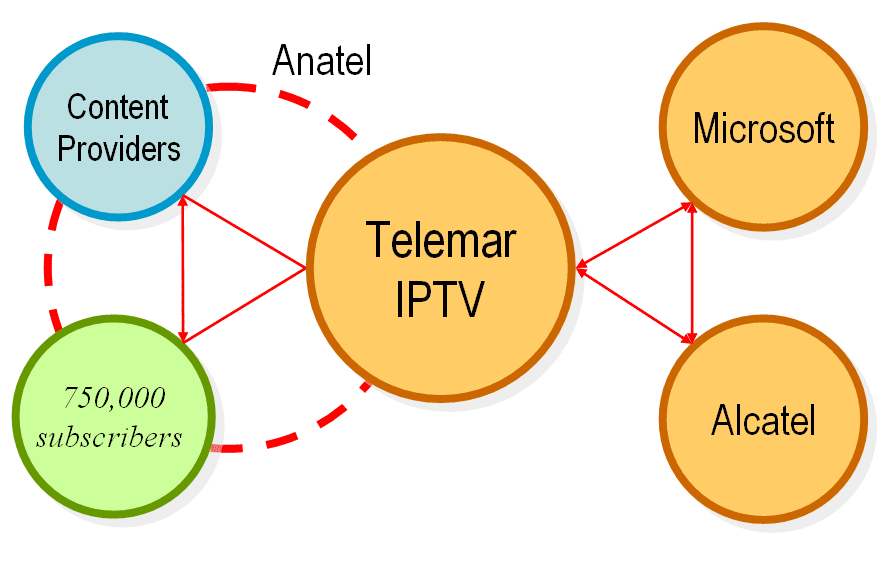 Telemar 1 a private Brazilian telecom operator serving three-quarters of a million subscribers, plans to announce its preferred platform for offering IPTV - Internet Protocol TV (Internet TV) services before the end of August. The operator plans to test IPTV with up to a thousand users this year ahead of a full-blown launch in 2007. It has short-listed three manufacturers to provide it with equipment and although it has not named names, the leading contenders are though to be a joint initiative by French equipment supplier Alcatel and US software giant Microsoft.
Telefonica de Brasil (Telesp), which passed one million DSL subscribers in 2005, was the first Telefonica subsidiary to launch an RFP (Request for Proposals) for IPTV and a small trial is progressing slowly. And Brasil Telecom, with its 900,000 ADSL lines, has already shown a taste for the video business with its VOD-over-public-Internet service, offering sports, music and lifestyle programming. A number of telcos are working to get the Brazilian government to deregulate video and IPTV market.
Facing increasing competition from mobile phones and the resurgent cable industry, Brazilian fixed operators are getting ready to deploy IPTV. While the challenges for Brazilian IPTV will be numerous, not all is lost of for fixed operators. The primary value proposition of IPTV is as a broadband solution bundled in triple- or quadruple-play packages. The relatively low pay-TV penetration in Brazil therefore represents an opportunity for the country’s operators, who may be able to use IPTV as a catalyst for pay-TV expansion.
IPTV is becoming part of our culture a long time ago before the brazilian government have chosen the japanese DTV digital television system wich is expected to bring the digital television to 92 million recievers spread abroad Brazil´s 8,500,000 sq km.
Brazilian Internet Television has been tested in various ways in the last 4 years (as well by mobile phones operators). There are too many good examples of television services over DSL in Brazil and now it is time to acheive commercial success among broadband subscribers. Websites like Globomediacenter by Globo.com and Bandnews are broadcasting their signal through Internet at DSL speed to the world.
[1] Telemar Norte Leste S.A. (Public, SAO:TMAR5) is engaged in telecommunication services in Brazil. The Company is a specialty provider of local and long-distance landline telephone networks for residential, small business and corporate clients. In addition, it offers international fixed telephony, public telephones, Internet services, videoconferences, image messages and data communications.
Bank of Brasil Pocket Bank
These expenses were US$ 1.22 billion (R$ 2.58 billion), or 16.7%, greater than those made in the previous year. In 2004, financial institutions in Brazil invested US$ 7.3 billion (R$ 15.4 billion) in technology, 10.5% of net assets. According to the Brazilian Federation of Bank Associations (Febraban), the tendency is for further growth this year.
"Brazilian banks, pioneers in ample use of electronic trade in Brazil, have already identified that the future is in doing business in the digital era," according to the FGV-SP study. Internet Banking and Mobile Banking are some of the areas in which financial institutions are investing.
The FGV's Annual Cost per Keyboard (CAPT) at banks is US$ 22,000 dollars, whereas in the service sector the total is US$ 10,000, in industry, US$ 9,000, and in trade, US$ 6,400. This index is determined by total investment divided by the number of keyboards installed in companies, including terminals at Automatic Teller Machines and cashiers.
 Bank of Brazil1 is revolutionizing the CAPT index launching the 3ª wave of banking attendance in the country. The first wave was to take the customers of the attendance box to be taken care of in ATMs terminals; the second wave was to place the "Internet bank" to the reach of the customers at their homes or offices; now the third wave is to place the "mobile bank" literally in the hands of its customers.
Today, Brazil has an active market of about 88 million cellular devices, in counterpart counts "only" on 13 million people with access to the Internet. What it demonstrates the existence of a very great number of people with capacity to participate of this type technological solution.
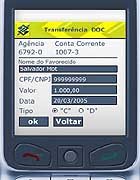 Today the BB mobile bank user can make since mere extract and balance consultations until sophisticated transactions as accounts payments, transferences between banks, BB has launched the possibility of the customer to catch an electronic loan and also has an innovation of the Bank of Brazil that is you to catch a consigned loan direct from the mobile device. One another interesting operation is the the prepaid customer is being able to recharge his mobile from the bank account. Today, 26% of almost the 3 million transactions that people carry through in "mobile bank" are related to the user mobile itself. This is a good indication, that the users who are using the solution also are using of daily prepaid and many times do not have access to the Internet.
The developer EverSystems is known by the financial area supplying solutions. Responsible for the creation of a mobile banking solution for the Vivo-BB operation, based on the BREW technology , the company now created the new BB version of mobile banking, based on J2ME technology.
The Bank of Brazil has also initiated its operation of pocket bank this week in Japan. The BB will be the first Brazilian financial institution with performance in that country to offer this service to the nipo-Brazilians. The bank has seven agencies in that country, besides keeping partnership with the post offices local for attendance to about 105 a thousand customers in the country. The new service will allow that the customers of the BB also have access its accounts in Japan and in Brazil.
[1] Bank of Brazil (Public, SAO:BBAS3) is the greater retail bank of the Country and possesss currently about 22 million customers. The BB has invested in the magnifying of the forms of attendance by means of electronic channels. With a platform of 39 a thousand terminals spread for the Country, the BB has today a base of 22 million account holders, who carry through 88% of its banking transactions from the auto-attendance service. Internet answers for 36% of the total of these atendances.
Prepaid business model
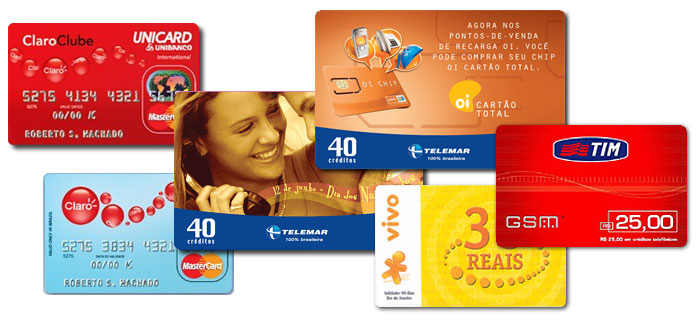 Prepaid refers to services paid for in advance. Some examples include gift cards, preloaded credit cards, tolls, and cell phone usage credit, among other items.
Prepaid phone cards began in the late 1970's in Italy. The purpose was to provide convenient phone calling for travelers and to combat payphone vandalism1. It wasn't until 1992 that the debit phone card began in the US.
Prepaid services and goods are sometimes targeted to marginal customers by retailers. Prepaid options can have substantial cost reductions over postpaid counterparts because they allow customers to monitor and budget usage in advance.
 Recent statistics (OECD Communications Outlook 2005) indicate that 40 % of the total mobile phone market in the OECD region consists of prepaid accounts. In some countries, such as Italy, Spain or Mexico, market share of prepaid can be as high as 90 %. In other countries, such as Finland or South Korea, the figure drops to about 2 %.
It seems that after serving well to the mobile phone market on countries like Brazil, Russia, India and China the prepaid card business model is opening the doors to other services.
The first nonphone-card prepaid programs were launched in the mid-1990s by national retailers such as Blockbuster Video and Kmart2. And now with services such as Flexgo (Microsoft), Wi-fi Internet (Velox), Brazilian AICE fixed phone (Anatel) gives their users the opportunity to access a lot of communications services that even in the 21st Century would last another century to be in the hands of low income population if not for those innovative business models.
Another service thought to follow prepaid model is the Ampla one, deliverer of energy services in 66 cities of Rio de Janeiro, who intends to launch this year the prepaid light account. Through a 0800 telephone number, the user goes to determine how much he wants to pay of energy by month. And, by his mobile phone, the user will be advised when his credits would be depleting.
[1] In fact there was a shortage of coins in Italy at the time and payphone theft was common. Cards were introduced with a magnetic strip on the back for use in special phones to combat the coin shortage.
[2] Tom Locke, “Billions in Gift Cards: First Data Plans to Add Loyalty Feature in ’05,” Denver Business Journal, December 10, 2004 print edition.
BNDES Innovation Fund
The Technology Fund launched last week (21 June) will sponsor projects that relate to economic and social development in specific subject areas, including agricultural biotechnology, drugs for neglected diseases, software and semiconductors.
Research into generating energy from biomass — such as developing fuel based on alcohol derived from fermented sugar cane — will also be eligible.
The bank has already invested US$128 million in such projects. The existing projects will be competing with new ones for the technology fund's grants.
The fund is intended to support projects that find technological solutions to problems already identified by Brazilian research institutes and economists.
It also aims to promote innovation by backing ideas that look set to introduce new products onto international markets, something that Brazil has not excelled at to date.
"Technology and innovation are critical factors for the country's development", says Aluísio Asti, one of bank's economists who helped set up the fund. Asti said the Technology Fund would operate in line with the bank's innovation policy that was introduced in 2005.
GOL Airlines
 GOL Linhas Aereas Inteligentes SA (Public, NYSE:GOL) is a low-fare, low-cost airline based in São Paulo, Brazil.
 The airline was established in 2000 and started operations on 15 January 2001. It is a subsidiary of Brazilian conglomerate Grupo Aurea, which has other transport interests including Brazil's largest long-distance bus company. Grupo Aurea in turn is owned by the Constantino family. Gol's unprecedented low fares revolutionized the domestic Brazilian air travel market. As of 2004, Gol had carried 11,600,000 passengers, and constituted 20% of the Brazilian air travel market. On 24 June 2004 Gol launched simultaneous initial public offerings on the New York and Sao Paulo stock exchanges. It is now owned by AeroPar Participacoes (77%), Venture (17.6%) and American International Group (5.4%) and employs 3,303 staff. The growth in Gol`s stock price made the Constantino family a member of the Forbes` billionaire list in 2005.

As the first discount airline in South America, Gol has modeled itself after the American discount flight giant Southwest and has rapidly made large profits.
Gol chief executive officer Constantino de Oliveira Junior, said: "We've made flying popular, we've extended the Gol effect to Brazil and South America by expanding our business, with innovation, efficiency, quality service and disciplined control of costs and rates."
"What made the difference was that Gol arrived on the scene with a new fleet. As a result, its maintenance costs were extremely low. In addition, it was operating on routes that were short and had a high density of traffic. It was selling tickets almost exclusively on the Internet, the way it is still doing today.” According to Oliveira, that approach means that Gol enjoys considerably lower sales costs per ticket.
Gol has managed to change some paradigms of the Brazilian aviation sector, which traditionally valued such concepts as sophistication, elegance and glamour when marketing air travel. The big concepts were broken by the simplicity, practicality and simplification of Gol’s operations.
Currently Gol has 41 flights between Brazil and neighboring Argentina. Most of its major destinations can be reached on direct flights from Miami, Dallas and Los Angeles.
* GOL Linhas Aereas Inteligentes SA Brazil's leading discount airline. The Company provides frequent service on routes between all of Brazil's major cities and to international destinations in Argentina, Bolivia, Paraguay and Uruguay. As of December 31, 2005, it operated 42 single-class Boeing 737 aircraft, and offered 420 daily flights in Brazil and to its international destinations.
Habib's Food Franchise
 THE BIGGEST BRAZILIAN FAST FOOD CHAIN, HABIB'S* opened its first shop in 1988, in Sao Bernardo do Campo, Sao Paulo state. Since that has innovated in various ways delivering new products and services that combine efficiency, originality but above all a clearly respect and knowledge about its market, the low and middle income population.
Low prices, variety and high performance in quality are the foundations which have brought Habib´s two prizes by ABF - Brazilian Franchising Association and an Alshop - Brazilian Association of Shopping Vendors prize (the brazilian retailer "oscar").
The Habib's relationship politics with its customers and the adjustment to the Brazilian pockets, brought in these 16 years a recognized success together the average consumer. The company presents respectable numbers as 120 million meals served/year, beyond a patrimony of 12 a thousand employee right-handers, responsible for all the operacionaliztion of the brand an essential part of the Habib's success.
The growth index translates the investments carried through in the 9 central offices of manipulation and distribution of menu itens, delivered through more than 260 shops in the main regions of the country.
 Habib´s has also innovated on the structural and intelectual capital of the company in building 9 interdependent enterprises that work toghether on the operationalization of the brand: an Industrial Bakery (Arabian Bread), 2 Ice cream factories (Ice Lip's and Portofino), Dairy products (Promilat), Contact Center (VOXLINE), Marketing (PPM), Engineering and Projects (Vector 7), Franchising (Franconsult) and Real estate Consulting (Planej).
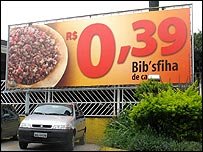 The most popular products at Habib's are the esfiha - a small, round flatbread topped with minced beef or cheese - and the kibe - a croquette of beef shaped like a rugby ball.
These are deliberately priced as low as possible. Esfihas sell for 69 Brazilian centavos (31 cents) each, with the price falling to 39 centavos in some special offers.
Although people of Arab descent make up a mere 7% of the Brazilian population, delicacies as hummus, stuffed vine leaves and tabouleh as part of its menu are being delivered at this time in less than "28 minutes" at home in every city that has a Habib's store.
Habib's
Sao Paulo, Brazil
Telephone: + 55 0800 775 6000
Site: www.habibs.com
* Habib's is a Brazilian fast food chain. Specialising in Arabic cuisine, it has more than 260 outlets across the country and has recently begun expansion into foreign markets. Habib's is the second largest fast food chain in Brazil, second only to McDonald's.
Ariaú Amazon Towers
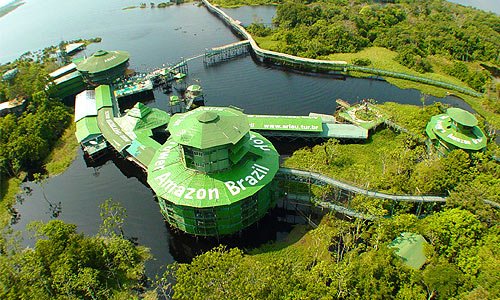 Ecotourism is an activity that provides financial and qualitative revenues. It is a business alternative, a lucrative activity capable of substituting for agriculture and exploitation of wood; the revenue will come with lodging, feeding, services and entrance to natural attractions.
 Ariaú Amazon Towers was inaugurated in 1987 and was the first hotel in the jungle. It is located along the river Ariaú, approximately 60km northwest of Manaus. From Manaus it takes about 2 hours to go by regional boats, by speedboat, 1 hour, and by helicopter 15min. It is entirely built on stilts at tree top level in the heart of the Amazon Rain Forest. The water of the river next to the hotel has high acidity and therefore is no mosquitoes in the surrounding area. Many famous people has visited the hotel through the years, like; former Chancellor of Germany Mr. Helmut Kohl, the Queen and King of Sweden, Mr. Bill Gates, former president of the USA Mr. Jimmy Carter, etc. Since the hotel was inaugurated it has grown a lot, today there are more than 300 guest rooms, beauty- and hair salon, and three places to land helicopters, - it has become as a small town in the jungle.

The hotel provides with several kinds of accommodations, standard & superior rooms, Royal- Presidential- & Imperial suites, and Tarzan's house. There are 310 individual apartments and suites, all with private baths, balconies, hammock, TV mini-bar, and a fan. You may add for room with air-conditioning, etc. There are as well telephone & Internet facilities, two swimming pools built at canopy level and restaurant and cafeteria facilities to serve up to 300 guests. Nearby is the Anavilhanas Archipelago, formed by 380 islands, which provides endless options for sightseeing. One auditorium with total infrastructure for 500 people. The Tarzan's house is located on the top of a nut tree (Castanheiro, one of the largest trees in the Amazon forest, 16m high). The Tarzan suite gives its guests a sensation of an adventure. It is complete with A/C, balcony, mini-bar, and private bath.
The Hotel uses local labor, generates employment and fastens the man to his community. Each direct employment generated by tourism represents another person with revenue to spend in their own community and indirect employment linked to services and other support for products such as lodging, food service, fuel, handicraft, equipment, film and courses.
The local community around the leisure complex acquired conscience that tourism increases the level of employment and quality of life, and started to preserve nature. The increase of local economic activity is the best form to preserve natural places such as the Amazon Forest in a short time.
Ariaú Amazon Towers
Manaus, Brazil
Telephone: + 55 (92) 234-7308
Site: www.ariautowers.com
Sustainable Banking Innovations
 Brazil's financial sector does it again: it's home to two of the four emerging market banks singled out for innovations in sustainable banking in the Financial Times 2006 Sustainable Banking Awards shortlist, released earlier this week. Brazil's Banco ABN Amro Real1 and Banco Itau2 were shortlisted for the "Emerging Markets Sustainable Bank of the Year" laurels, along with South Africa's Nedbank and India's Yes Bank.
 The FT Sustainable Banking Awards program, held jointly with World Bank's IFC - International Finance Corporation, recognizes global banks that have actively integrated social and environmental objectives into their operations.

Brazil is fast establishing itself as a hub of innovations on sustainable financing in emerging markets. In December 2005, it launched the Bovespa Sustainability Index, the first of its kind in Latin America. The index includes local companies listed on the Sao Paulo Stock Exchange and will track not only their economic and financial performance, but also their corporate governance and environmental and social performance.
[1] Banco Real was founded in Belo Horizonte, Minas Gerais state, on 16 June, 1925 as Banco da Lavoura de Minas Gerais. In mid-1998, the strategic partnership between Banco Real and Banco ABN AMRO SA - the Brazilian subsidiary of ABN AMRO Bank - was announced. ABN AMRO Bank (ABN AMRO), which owns all of the shares of ABN AMRO Bank N.V., is an international banking group offering a range of banking products and financial services on a global basis through its network of 3,557 offices and branches in 58 countries and territories.
[2] Banco Itau Holding Financeira S.A. (Public, NYSE:ITU) is the 2nd major private bank in Brazil founded in Sao Paulo, on 1945. The Company has four principal operations: banking (including retail banking through its wholly owned subsidiary, Banco Itau S.A. (Itau), corporate banking through its wholly owned subsidiary, Banco Itau BBA S.A. (Itau BBA) and consumer credit to non-account hold customers through Itaucred), credit cards, asset management and insurance, private retirement plans and capitalization plans, a type of savings plan.
Service Economy
In the brazilian economy, services create up to three-quarters of the wealth and 71% of employment, and yet we know relatively little about managing innovation in this sector. The critical role of services, in the broadest sense, has long been recognized and includes businesses like restaurants, hotels, hair salons, banks and airlines but is still not well understood. Most research and management prescriptions have been based on the experience of manufacturing and high technology sectors. There is a clear need to distinguish which, if any, of what we know about managing innovation in manufacturing is applicable to services, what must be adapted, and what is distinct and different.
 %GDP Brazil - Services Manufacturing Industry Agriculture (World Bank)
Thriving demand for services has allowed the world's 10th economy to maintain its global competitive edge, although some economists regard our economic wealth purely over agriculture, industry and manufacturing — the engine of 70's growth — in spite of knowledge intensive based services (where TICs have a representative role), turism, restaurants, hotels, health care, transportation, entertainment, financial services and other ones that could realy get the best our people, our food, our lifestile and our incredible landscape.
There are a lot of motivations to study Brazil services innovations, entrepreneurships like Ingresso.com, Itau Bank, Gol Airlines, Globo.com, Boticario Cosmetics, Oi telecom, Spoletto's food, Habib's, Casa&Video are among success stories of a good balance over demand and offering in a heterogeneous but democratic country.
EMBRAPA Agro-energy
 The Brazilian federal government created an agro-energy unit for the Brazilian Agricultural Research Corporation (Embrapa). The new unit was announced last week, during the celebrations for the corporation's 33rd anniversary.
EMBRAPA Agroenergia will be in charge of coordinating agro-energy research. Four major work groups will be formed: alcohol and energy derived from sugarcane; biodiesel from animal and plant sources; forest biomass; and agricultural and agribusiness waste products.
The government announced also the formation of the National Consortium of Agro-energy, which will have the aim of organising and motivating the research and production of alcohol fuel and biodiesel together with the private sector.
The new EMBRAPA unit will help the country achieve the government's official goal of achieving a 2% mixture of biodiesel with diesel fuel by 2008 (around 800 million liters altogether) and a 5% mixture by 2011.
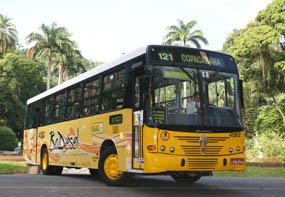 Meanwhile at Rio de Janeiro the RioBiodiesel program prepares to launch the second biodiesel urban bus. The vehicle fuel, composed by 95% of metropolitan Shell diesel (with low sulphur emission) and 5% of soybean oil was developed at IVIG an Energy and Climate Change Research Laboratory at Federal University of Rio de Janeiro in a parternship with, Volkswagen (vehicle), INT - National Institute of Technology (design), MWM (engine) , Bosch (electronic injection), Shell (fuel), Mahle (fuel filter) and Faperj (research finance).
The intention of the Rio de Janeiro government is to stimulate the entrepreneurs so that, in the Panamerican Games, in 2007, all the urban buses of the capital are circulating with biodiesel mixture.
* Embrapa - Brazilian Agricultural Research Corporation, networking through 37 Research Centers, 3 Service Centers and 11 Central Divisions, Embrapa is present in almost all the states of the Union, each with its own ecological conditions. There are 8,619 employees in Embrapa, of which 2,221 are researchers, 45% with master's degrees and 53% with doctoral degrees. Embrapa coordinates the National Agricultural Research System, which includes most public and private entities involved in agricultural research in the country.
Embraer School
 Besides being one of the most innovative brazilian companies, Embraer* (Public, NYSE:ERJ) - Empresa Brasileira de Aeronautica S.A. (Embraer) is also engaged in educational programs at the state of Sao Paulo. The College Engineer Juarez Wanderley (CEJW) is the newest Embraer innovation program, managing a school that is becoming reference in the social area.
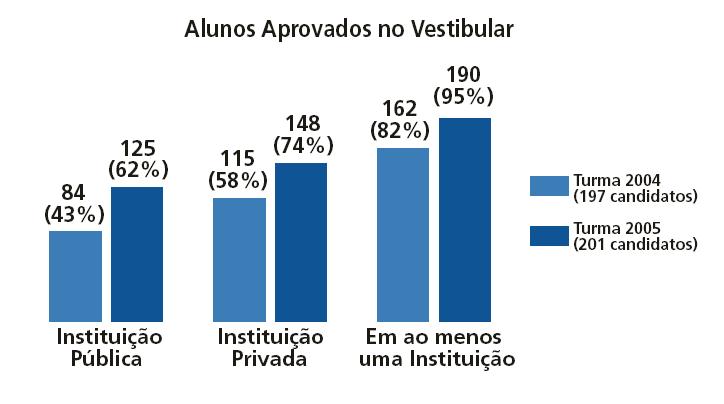
Created four years ago, the Juarez Wanderley selects its 200 annual new students between the most applied pupils of the public schools of the region of Sao Jose dos Campos, where is the headquarters of Embraer. In the selection periods, an average of 27 candidates dispute each vacant.
Embraer has already invested US$ 13.5 million in its school. Each student costs US$ 450 dollars per month. In the public net of the state of São Paulo, the monthly average investment in each student is about US$ 88 dollars.
Currently the CEJW counts on 600 students, divided in Senior high school and high school, who are already atending on examinations and entering the bests brazilian universities. With the College Embraer aims at, beyond the high academic performance, the integral development of the personality of the students and the formation of its social conscience.
Also they prioritize Embraer values: the conscience of brazilian nationality, ethics, personal freedom and the commitment with the future of those citizens who will fly with their families and design the 21st century Embraer airplanes.
* Embraer-Empresa Brasileira de Aeronautica S.A. (Embraer) is engaged in the manufacturing and sales of aircraft for commercial, business jet and defense purposes. The Company's aircrafts include EMB 120 Brasilia, a passenger aircraft; AM-X, a jet strike bomber, and ERJ 145 series, commercial aircrafts. Embraer also markets and sells the Legacy, a line of business jets. For the defense market, designs, develops, integrates and manufactures a wide range of defense products, principally transport, training, light attack and surveillance aircraft. (REUTERS)
Brazilian Voting Machines
 The interaction between the evolution of technology and the development of economy and society has always been an important dimension of human history. This applies to the Iron and Bronze Ages as well as to modern times. The transition from the agricultural society towards the industrial society provides the most pertinent illustration of the profound implications which the full diffusion of new technologies can have on family structures, work relations, settlement patterns, economic and political power configurations, and also on behaviour patterns and value systems. The relationship between technology on the one hand and economy and society on the other is not uni-directional. Not only does technological progress result in the continuous change of economic and social structures, but the latter, including the evolution of attitudes and values, has at the same time a major impact on the direction and the speed of technology development. The industrial society of today, characterised by mass production, mass consumption and mass government, is in many ways a complex incarnation of the technologies of the 20th century. But there is no doubt that the profound change in political, economic and social structures has provided the conditions to enable the transition to a new paradigm.
Brazil was the first country in the world to have fully electronic democratic elections.
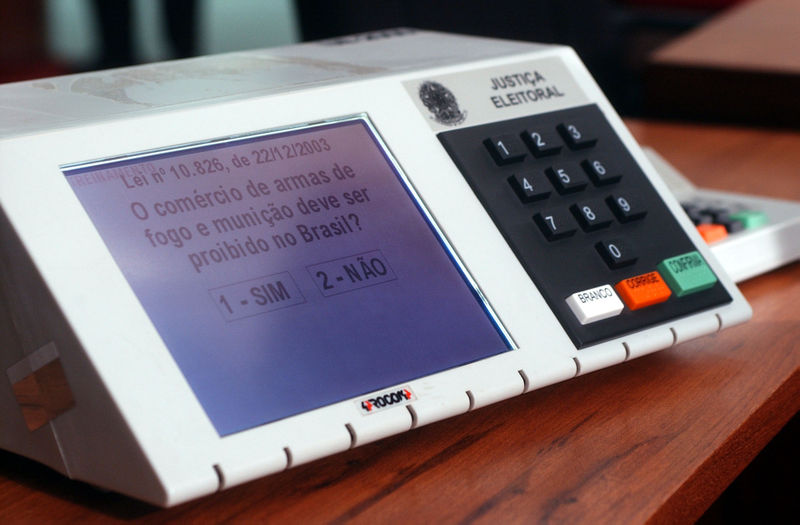
 The Brazilian voting machines were firstly developed in 1996 by a Brazilian partnership formed by three companies Samurai (formely known as OMNITECH), Microbase and Unisys do Brasil attending the TSE RFP for the Brazilian Elections in 1996. This machine was an IBM PC 80386 compatible adapted to perform as a voting machine, and was known as UE96. In 1998, Procomp, Microbase and Samurai teamed up to produce UE98. Again in 2000, Microbase and Procomp developed UE2000 together. In 2000 Brazil achieved the first completely automated election. Every voter in Brazil used the electronic system to vote.
The original operating system was VirtuOS developed and copyrighted by Microbase. It was used in 1996, 1998 and 2000. In 2002, Unisys was incapable to set a patnership with Microbase, and Microsoft provided the Windows CE operating system free of charge. In 2004, Procomp decided to migrate to Linux as a cost reduction measure.
The chief goal of the Brazilian voting machine is its extreme simplicity, attempting to be as straightforward as a public phone booth.
Electronic voting was introduced to Brazil in 1996 (when the first tests were carried in the state of Santa Catarina, Brazil. Since 2000, all Brazilian elections have been fully electronic.
News indicate that Paraguay, Argentina, Mexico, and other countries where corruption and election fraud are not just abstract concepts, may soon borrow or rent Brazil's system. Brazil lends the machines to other countries for elections as well. They have been used in Paraguay and Ecuador and there are plans to export the patented machines.
SAMURAI
Telephone: (+5511) 50973014
Site: www.samurai.com.br
Brazilian Telecom Sector
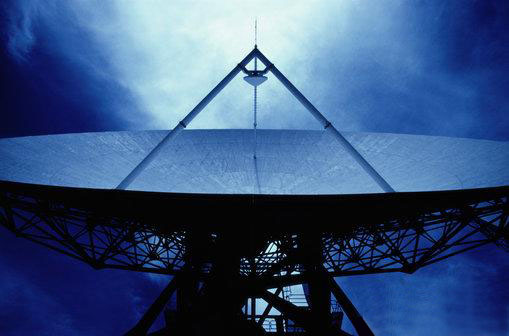 Brazil is the first one from the developing world, to initiate and maintain innovation capability especially in the switching equipment component of the telecommunications equipment industry (Mani, Sunil. 2004). The maintenance of this capability has come under some strain with the increasing external integration of the Brazilian telecommunications economy. Various components of this innovation system such as ANATEL - National Agency of Telecommunication, CPqD (telco industry R&D centre in Campinas, SP) and Embratel1 - Brazilian Telecommunications Company ) and especially the research and policy-making by Ministery of Communications and Ministery of Science and Technology parts to maintain this capability. The ensuing analysis shows that the innovation system is learning to cope with changes in its external environment like the Internet, mobile operator companies and even now with the digital television approaching. The country has not only managed to maintain its capability in the telecom sector, it has enhanced it in areas such as manufacturing and marketing, for which it did not have previous capacity.
 Innovation capability in telecoms equipment in terms of the ability to conceptualize, design, and manufacture state-of-the-art telecommunications equipment,coupled with the ability to keep pace with important technological changes. This definition of innovation capability is operationalized in terms of an index of R&D. By taking three cases of telecoms technologies namely, (a) main automatic local exchanges; (b) a Wireless in Local Loop access technology; and (c) telecom software exports, it is demonstrated that the country has a growing innovation capability in this sector.
With an early adopter attitude from the brazilian market such technologies transformed in products and services helped Brazil to be on the entry level of the telecom market with such international companies like Teléfonos de México2 (Embratel), Portugal Telecom3 and Telefónica Móviles4 (Vivo), América Móvil5 (Claro), Telecom Itália6 (TIM) and Tele Norte Leste7 (Oi) investing on intangible assets, intellectual capital and new business models in Brazil.
1 Embratel is a major Brazilian telecommunications company headquartered in Rio de Janeiro. The company was the long distance arm of Telebras until it was bought by the U.S. company MCI Communications for 2.65 billion reais during the 1998 break-up of Telebras. Since 2003, it is owned by Telmex (NYSE: TMX).
2 Teléfonos de México (NYSE: TMX), better known as Telmex, is a Mexican telecommunications company that provides telecommunication products and services in Mexico and in many parts of Latin America, such as Argentina, Brazil, Chile, Colombia, and Peru, and in North America to the United States. In addition to traditional fixed-line telephone service, Telmex also offers Internet access.
3 Portugal Telecom (Euronext: PTC, NYSE: PT) is the biggest telecom operator in Portugal. It operates mainly in Portugal and Brasil. It also has a very important presence in Morocco, Guinea-Bissau, Cape Verde, Mozambique, Timor-Leste, Angola, Kenya, China, and São Tomé and Príncipe.
4 Telefónica Móviles S.A. (NYSE: TEF, TYO: 9481 ) is a Spanish telecommunications company. Operating mainly in Spain and Latin America it is one of the largest fixed-line and mobile telecommunications companies in the world, 4th in terms of number of clients and 6th in total market value.
5 América Móvil AMX is a publicly traded wireless communications company that provides services to over 93.3 million wireless subscribers in Latin America as of December 31st 2005. The company has been a venture of Carlos Slim Helu. World headquarters is located in Mexico City, Mexico. It was ranked number 1 Information Technology company in 2005 by the Business Week magazine
6 Telecom Italia is an Italy-based telecommunications group engaged in the international information and communication technology sector. Telecom Italia's subsidiary companies Telecom Italia Media and Olivetti (the Telecom Italia Group), together with TIM S.p.A., which was merged into the Company on June 30, 2005, offer wireline and mobile communications, Internet, media and information technology solutions.
7 Tele Norte Leste holds the largest telephone company in Brazil, considering both lines in service and revenues. It is headquartered in Rio de Janeiro. Telemar was formed as Tele Norte Leste to merge sixteen state-owned incumbent local exchange carriers (ILECs), during the privatization of Brazilian telecommunications system.
Designed to Compete
 A Brazilian study shows that design is considered a chief strategy for greater industrial competitiveness. Around half of the survey companies invested in design in 2003. The effort was greater in medium and large companies: 56,7%, against 43,2% of micro and small companies. And it pays off.
Compared to company gross revenues there was an increase in investment. In 2003, 18.7% of companies invested more than 2% of gross revenues in technology. For 2005, the forecast is that 30.6% of the companies should increase their investment in design.
The investments in design are showing generally profitable. About 55.6% of medium and large companies stated that the strategy increased their revenues, against 53.7% in micro and small companies. The areas presenting the most significant return in design were the pharmaceutical and food sectors.
Information according to the study on indicators of industrial competitiveness, published by CNI (The National Confederation of Industries) and Sebrae(Brazilian Micro and Small Business Support Service) [1]. The information in the study was collected between October 2004 and March 2005, and is based on a questionnaire, completed by 743 businessmen nationwide.
[1] Sebrae is a great partner of the small Brazilian entrepreneur. It is a non-profit private institution, supporting the development of small-sized business activity, a result of the union of both the public and private sectors, and the country's main fostering and research entities.
Self-sufficiency in petroleum
 After 50 years of research and development on the energy sector Brazil has reached self-sufficiency in petroleum, guaranteed with the entry into operation of platform Petrobras 50 (P-50). The P-50 structure will be the largest in operation in the country, adding over 180,000 barrels of oil to Brazilian production.
Apart from producing oil, P-50 will have capacity for compression of six million cubic metres of natural gas and will store another 1.6 million barrels of oil. According to the concept adopted by Petrobras ( SAO:PETR3, SAO:PETR4, NYSE:PBR), self-sufficiency is the availability of oil produced at equal or greater or equal volumes to the refining capacity in the country, for the supply of the domestic market.
Today, the domestic demand for the product is around 1.8 million barrels (the same as the National Refining Park), whereas production after the start of operation of the P-50 should reach year-end at a daily average of between 1.9 million and 1.91 million barrels
Next year as well, Petrobras expects to place in operation platform P-34, which will be installed in the Jubarte Field, in the Espírito Santo Basin. The forecast is that this platform will have a daily production of 60-70 thousand barrels of petroleum.
The main activities of Petrobras are to create an infrastructure for exploration, production and supply of byproducts for the industrial progress of Brazil. These areas together operate with another eleven supporting entities called services and form the Petrobras System*.
 Two of these services are fundamental: the Cenpes - Petrobras Research Center, that has one of the most advanced technologies in the world and attends several Petrobras segments, and the Engineering Service, responsible for putting the corporate projects into practice through its operations.
The state enterprise plans to build another around 12 production units scheduled to go into operation by 2010, with the hope to reach 2010 producing 2.3 million barrels of oil in Brazil.
*Petrobras System includes four subsidiaries besides the holding operations: Petrobras Química S.A - Petroquisa (SAO:PTQS3, SAO:PTQS4), operating in the petrochemical industry, Petrobras Disctibuidora S.A. - BR, in petroleum byproduct distribution, Petrobras Internacional S.A. - Braspetro, in exploration and production and in providing technical and administrative services overseas and Petrobras Gás S.A. - Gaspetro, responsible for the Bolivia-Brazil gas pipeline and Petrobras Transporte S.A. - Transpetro, created to execute the maritime shipping of the company activities.
Montana Parruda

IN THE LAST TWO DECADES, BRAZIL HAS BECOME AN INCREASINGLY INFLUENTIAL EXPORTER in several agricultural markets. From 1992 to 2002, Brazilian net exports of soybeans, soybean meal, and soybean oil increased 444, 65, and 288 percent, respectively, giving Brazil a 30 to 40 percent share of world trade in these commodities. Over the same period, Brazil switched from being a net importer of corn and cotton to being a net exporter, providing 7.7 and 5.8 percent, respectively, of corn and cotton traded in 2003. The modern agriculture presents each time more demand for technology. Ongoing research at Embrapa (Empresa Brasileira de Pesquisa Agropecuária), the Brazilian Agricultural Research Corporation and other public and private organizations are among to change the Brazilian large-scale, commercially oriented, forward-looking operations suited to compete in commodity markets that are constantly driven to increase productivity and reduce costs. Intent to this reality, the Montana Industry of Machines decided to locate itself as manufacturer of products of high quality and agregated value. Amongst the products, the automotive spray Parruda was distinguished. Baptism of Parruda is to emphasize robustness and performance, MH-3025 H is an equipment of great efficiency, whose project unites technology, style and comfort. Its closed cabin and endowed with air-conditional guarantees security against contaminations. It still possesss characteristic as bold lines and good productivity, that makes of the product a competitive example of design as distinguishing. Developed by MFC Design, with coordination of the Design Center of Paraná, the Parruda provided to the Montana manufacturer a leverage in the invoicing of the 100% order, passing of US$ 12.5 million annual to US$ 22.5 million in the first year of production. In accordance with sells registered, in the past few years a number of 8 units was commercialized in 2000 , in 2001 this number passed to 35 units and in 2002 it reached about 100 units•

Fiocruz
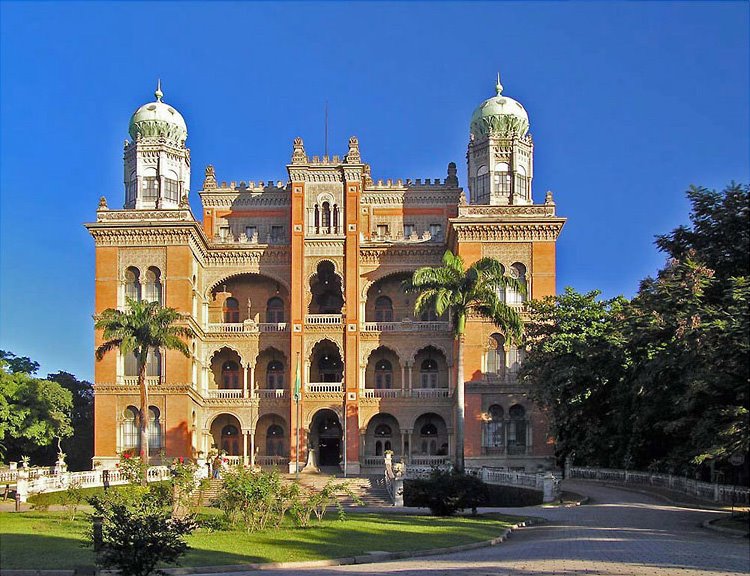
Inaugurated on May 25, 1900 under the name of Federal Serotherapy Institute, Fiocruz* was given the mission of fighting the great problems of public health in Brazil. Therefore, Fiocruz became a think tank concerned with Brazilian reality and experimental medicine.
Fiocruz is located on a 800,000-square meter campus at Manguinhos, a suburban area in the North Side of Rio de Janeiro. Around three historical buildings of the old Federal Serotherapy Institute – the Moorish Pavilion, the Watch Pavilion and the Mews -, there are ten of Fiocruz’s thirteen technical-scientific units and all the technical and administrative support units. Another five units are located at Rio de Janeiro, Belo Horizonte, Salvador, Recife e Manaus.
Today the institution is noted for its excellence in a wide range of health activities, including research development, hospital and ambulatory care services; production of vaccines, drugs, reactants, and diagnostic kits; human resources teaching and training; information and communication regarding health, science and technology; quality control of products and services, and the implementation of social programs. It has over 7,500 employees and health professionals with different engagements, a workforce proud of being at the service of life.
FIOCRUZ
Telephone: (+5521) 25984242
Site: www.fiocruz.br
* The Fundação Oswaldo Cruz (FIOCRUZ) is a public institution linked to Ministry of Health and one of the main technical and scientific supports to the Unique Health System - SUS - activities. The FIOCRUZ institutional mission characteristics in education, research, production and services of information allows a good performance in the field health information.
Futura Channel
Since its creation in 1997, Canal Futura has become the reference for educational projects in Brazil through its experience with social private investment.
Today companies have become more interested not only in their products and public image but in the way they connect to the community where they do business. Especially in relation to its employees, business partners, communities and environment.
That is the role that Futura plays, interacting with people from all over and giving the opportunity to brazilian companies to reach our population trought tele-education and projects in the social area.
For the last seven years, Futura has presented educational programs and professional "how-to-do" workshops such as "Futura Profession"; Language and Reading programs such as "Some Words" and "Tunning the Language"; entrepreneurial workshops such as "Hand Made"; and a variety of educational programming for the entire family like "Teca on TV" and "Knowledge grows on trees".
Programs like "Telecurso 2000", update professionals in the metal and mechanical field through 360 television classes and "Telecurso 2000 - 1° Grau"is aimed at workers at a low school level, youngsters and adults, the program offers classes on the contents of high school. Finnaly, "Telecurso 2000 - 2º Grau" is aimed at workers at a low school level, youngsters and adults, the program offers classes on the contents of middle school.
In all the country, more than 48 million people can access this high quality educational programming. Among the potential audience, 20 million people regularly watch Futura.
Packaging for Claro mobile phones

Packaging composed of an injected base in high impact polystyrene and an injected lid in crystal polystyrene. The packaging also includes two PET thermoformed internal parts that are used as a cradle for the handset and other accessories. Manufactured by Sanremo S.A. from Esteio, Brazil and designed by GAD´DESIGN from São Paulo, Brazil. Was Winner in the Packaging/globe packaging iF product design award 2006.
Spirit Beach sunshade
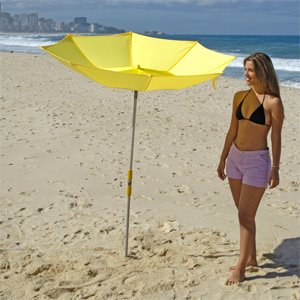 The “Spirit” sunshade has two characteristics that set it apart: First, it opens the “wrong” way round, which means an automatic adaptation to the force of strong winds. Second, its helical shape was created to make the sunshade easier to install. The frame is made of fiberglass and PP injected parts, and the pipes of anodized aluminum, making the product at once durable and ecologically responsible. The main advantages of the sunshade are that it is easy to open and plant in the ground, has a storage pouch and air cushion in the upper part that serve to reduce the temperature below, and also has two lower, zippered openings on opposite sides that offer access to the upper part.
Designed by Celso M. Santos and Christian Albanese from Rio 21 Design Ltda. from Rio de Janeiro, Brazil; manufactured by W. S. de Campo Grande Moldes e Peças Plásticas Ltda. from Rio de Janeiro, Brazil.
Pride in being Brazilian
 Brazilian astronaut Lt. Col. Marcio Cesar Pontes became Brazil's first person in space. He flied on a Russian Soyuz to the International Space Station.
Pontes began training in 1998 in the United States and was scheduled to fly to the space station aboard a U.S. space shuttle, but those plans were scrapped after the U.S. National Aeronautics and Space Administration suspended shuttle flights in the wake of the 2003 Columbia explosion.
Following the U.S. shuttle disaster, Brazil began discussions with Russia about the possibility of Pontes traveling aboard a Russian rocket.
During a November 2004 visit to Brazil, Russian President Vladimir Putin also agreed that Russia would help Brazil resume its space program and restore its rocket-launching base, which was destroyed by a rocket explosion in Alcantra Base Station on 2003 that killed 21 skilled technicians.
Brazil and Russia signed an agreement for the space mission during Brazilian President Luiz Inacio Lula da Silva's visit to Moscow last October 2005.
Marcio Pontes will held scientific experiments in International Space Station regarding to INPE space navigation systems and Embrapa biotechnology and food experiments on low gravity. Brazil is one of the 15 countries in the world with a complete space program from telecom research, satellite construction and navigation systems, rocket fuel and launch vehicles.
 From left, U.S. astronaut Col. Jeffrey Williams Russian cosmonaut Pavel Vinogradov and Brazilian astronaut Marcos Cesar Pontes, shake hands during a news conference at the training center in Star City outside, Moscow, Russia, Wednesday, Feb. 8, 2006. Credit: AP Photo/Misha Japaridze.
World design competition awards Brazilian products
 Nineteen products and 17 companies from Brazil were awarded prizes in the edition of the iF Product Design Award, most important design award in the world. Brazil competed with 156 projects. The prize giving ceremony happened last week, in Hanover, in Germany.
The prizes acclaimed the work of designers and companies that had won in other editions, like Antonio Bernardo (jewellery), Fernando Prado/Lumini (lighting) and Filomena Padron/Natura (packaging). The information is from the Ministry of Development, Industry and Foreign Trade.
Flytex jumpsuits
 The garments that Brazilian astronaut Marcos César Pontes is going to wear during his trip to space on board of a Russian ship were made in São Paulo, SE Brazil. Two blue jumpsuits, two pairs of trousers, five polo shirts and a leather jacket are part of the baggage. The jumpsuits, which were made according to North American military norms, are already being worn by Pontes during his training.
The company from São Paulo that is responsible for his clothes is Flytex*, which is specialized in garments and accessories turned to aeronauts, policemen and professionals of other tactical activities. This is the first time that the company has made an astronaut jumpsuit. "I am very pleased with the story," stated Marília Fajardo Oliveira, who is responsible for production of the garments.
According to her, the first contact with the Brazilian Space Agency (AEB) took place in November last year, when a representative from the AEB saw a pilot wearing a jumpsuit made by Flytex at a shopping centre in Brazilian capital Brasília. "The first order they made was for the emblems to be stitched onto the jumpsuit," stated Marília, who made three emblems: the Brazilian flag, the symbol of the Brazilian Foreign Trade Association and of the Centenarian Mission, an honour to the first flight by Brazilian aviator Santos Dumont.
Flytex
Telephone: (+55 11) 3501 3380
Site: www.flytex.com.br
* Company Flytex, from the interior of the state of São Paulo, is specialized in uniforms for professionals like aeronauts and policemen. Flytex arose four years ago and produces around 500 items a month. Apart from the jumpsuits, trousers, polo shirts and jackets, the company produces waistcoats with pockets, bags for helmets and other accessories. Flytex garments may be found over the whole of the national territory.
Gold Wax and Honey
 Many of the beekeeping activities in developing countries in the past have been oriented towards honey production. Wax usually was a by-product and other possible products have rarely found consideration. Such neglect of other products has a variety of reasons among which an easily accessible market or the lack of knowledge about production and further use are of major importance. While production methods of other primary products can be adapted from common beekeeping texts, the further elaboration and use of the same products can rarely be found. If so, descriptions range from highly specific scientific results to self-proclaimed experts fraudulently exploiting consumer ignorance. In order to present a comprehensive and practical review this bulletin tries to synthesize available information from scientific literature and practical, technical literature including the few indepth reviews available on some of the primary bee products such as honey, Wax and propolis.
Brazil is the seventh largest producer and exporter of honey in the world (ANBA, 2005). This position was reached due to the quality and variety of the honey, mostly wild, and also to the space left open by China, which faced sales restrictions due to the use of pesticides in the production. With the return of the Chinese to the market, however, Brazil must go after new buyers so as to maintain foreign sales or add value to their products on the honey and wax manufacturing.
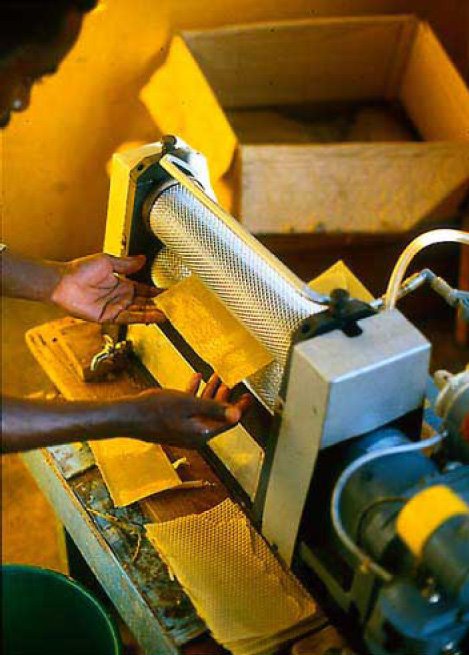 Jose Vilane, commercial director of Apilani, tells the innumerable fruits that his company harvested and the possibilities of the innovation as way to gain better markets. Dedicating the beekeeping to it initially as occupational therapy, its family finished developing the first Brazilian electrical alveolador wax cylinder - in the occasion only six of them existed in Brazil , some already badly functioning . The machine, only manufactured in Germany before Apilani product, is strategical for this diverse market and was awardee times. Today, only Germany and Brazil dominate the process of manufacture of the cylinders, exported by the Apilani since 1991.
Brazilian exports of honey added up to US$ 10.8 million between the months of January and July of 2005. The state of Piauí, in the Northeast of the country, holds the second position for sales in the international market, with US$ 1.6 million. The first place was the state of São Paulo. According to estimates of the Brazilian Apiculture Confederation, Brazil owned, in January 2004, about 4 million beehives producing 33,000 tons of honey per year.
Early adopter attitude
 Brazilian Consumers Can Now Receive Calls To Their Own SkypeIn Number From Any Mobile Or Land Phone Through Transit Telecom’s Network.
School of the Future LABITV
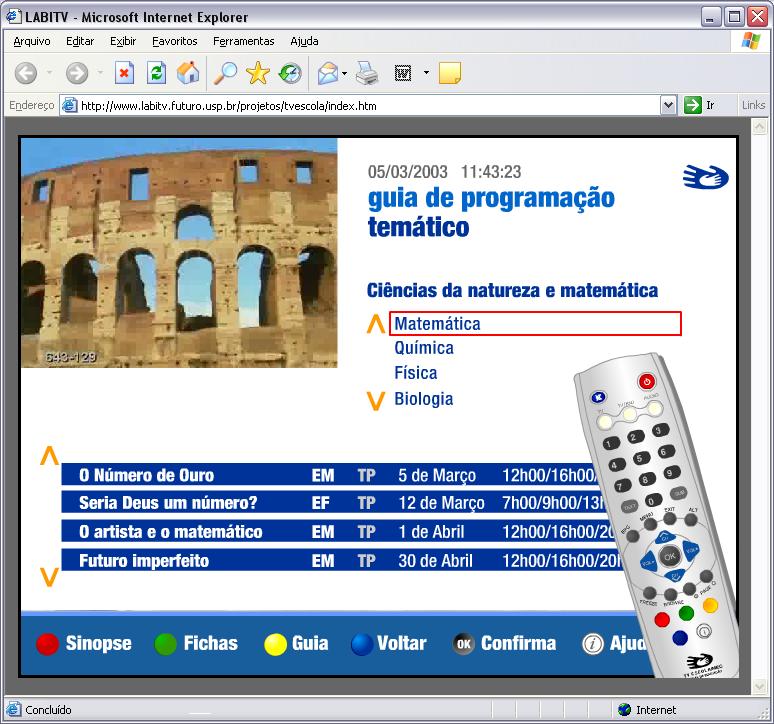 The LABITV main objective is the research, the development, the production and the implementation of formats, interfaces and solutions for specific multimedia environment for learning and work.
For 12 years the new technologies of communication and information applied to education consist on the focus work of the USP School of the Future. With the crescent worldwide presence of Interactive TV, we met attracted by this new possibility that converge various communication ways present in our day-by-day activities.
This project will be more interesting, as much entities, nucleus or groups participate. For more information, contact thais@futuro.usp.br.
*The School of the Future of the University of São Paulo, is an interdisciplinary laboratory investigating the impact of the new communications technologies on learning at all educational levels. Begun in 1989 as a departmental laboratory in the School of Communications and Arts, its growth and increasingly interdisciplinary nature took it out of that home in 1993 and placed it under the aegis of the Office of the Dean of Research, where it continues to flourish, financially self-sustaining and independent of the University budget, but with strong encouragement and guidance from the central administration.
Mobile developer
Mobile Content
 Vivo, the biggest Brazilian mobile operator, with more than 30 milions of customers, published its mobile service ranking. According to Vivo the most searched products are:
1st. Ringtones (2,5 millinos downloades ringtones /month)
2nd. News
3rd. Games (1 million downloaded games /month)
4th. Images (wallpapers and animations)
5th. Videos (150,000 videos downloaded /month)
In spite of that, there is a new generation of entrepreneurs whom discovered to gain money with that market behavior change that occured in the mobile market. Their work is to invent new features for a younger public, between 16 and 28 years, that like to play, to download music or to order messages for the mobile devices.Their products had growth to a US$ 250 million profit to the operators on mobile telephony in this year.
Of this total, it is calculated that those SMEs companies raised US$ 75 million. Five years ago, only a few companies (10, almost in academic area and universities) existed creating this type of content. Today, they are already about 120 in Brazil. And there are more people entering in the branch, also foreign ones, that sees Brazil as a promisse field for this kind of business.
 The new generation of entrepreneurs share somes common characteristics. They are young, with less than 30 years old, they love technology. Most of them begun their business before they gained the academic level. The have anticipated that the mobile phones, and not the computer, would bring the digital innovation to most of the brazilians. The country has today more than 80 million mobile users, as well 12 million internet users.
Some Vivo prices (feb 2006):
US$ 1.50 /ringtone
US$ 0.09 to 0.14 /news
US$ 3.00 /game
US$ 1.54 /image
US$ 1.50 /video
* Vivo (Telesp Celular Participações S.A. IBOVESPA: TSP, Tele Leste Celular Participações S.A. - IBOVESPA:TBE, Tele Sudeste Celular Participações S.A. IBOVESPA:ESD and Celular CRT Participações S.A. IBOVESPA:CRT, Tele Centro-Oeste Celular S.A. IBOVESPA:TRO), the largest cellular telephony market organization of the Southern Hemisphere, almost included in the group formed by the ten largest companies in the world within the industry, and the largest Brazilian company regarding number of customers. As a result of all this, the Top of Mind - VIVO brand, the cellular phone used by 20.7 million Brazilians, in accordance with data from December 2003.
Brazilian Digital Television
 Any country looking to bring in digital television can choose from the three standards which already exist, the Japanese, US and European. But rather than choose one standard over another, the Brazilian government has decided to take the best of them and include recent technological advances to create a completely new standard.
Ministry of Science & Technology is bringing together experts from 20 universities coordinated by CPqD (telco industry R&D centre in Campinas, SP) and major IT companies from Japan, US and Europe to work on the project. Brazil is the first country in Latin America to make the move to digital television. It is possible that other countries in the region may follow suit and adopt the new standard, making the potential market even greater.
The cultural and educational use of a television digital system as a form to increase the information access to build and transform the knowledge in the information era, approaches the potential forms of use of the resources of the digital television in the educative context, at a moment that it precedes to the choice of the technological model of reference for the country. It presents the existing standards and the governmental movement in the choice of the Brazilian system.
Venko Talento
 The Brazilian companies Teikon Tecnologia Industrial and Venko Telecomunicações signed, with the government of Brazil's southernmost state, Rio Grande do Sul, a protocol of intentions for the implementation of a cellular phone factory in the state.
The project should get US$ 7 million. The production should reach one million phones in 2006 on the GSM standard for mobile telephony. Production starts in February. They will manufacture mobile phones of the "Talento" model, equipped with integrated loudspeaker, games, blue display, wap, 30 polyphonic rings, organiser, intelligent keyboard and 100 memory spaces.
With the new factory, the Rio Grande do Sul will become the third Brazilian state to manufacture cellular phones, which demands state of the art technology.
Embraer Light Jets
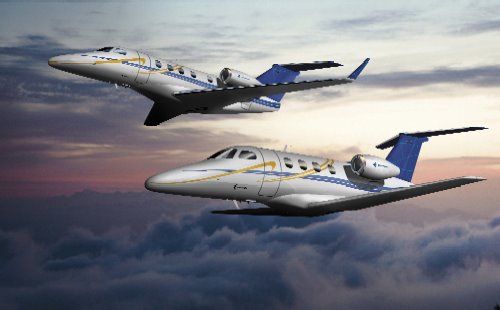 Embraer* (Bovespa: EMBR3 - Embraer ON, EMBR4 - Embraer PN) is already the fourth biggest civilian aircraft manufacturer in the World (behind american Boeing, EU Airbus and canadian Bombardier) and is preparing to compete in a segment that promises to be one of the most income-producing niches in the next years: the mini executive jets or "light jets".
A roadshow with a mock-up in natural size of the Phenom 100 is already in the United States, coast-to-coast, according to Beto Largman. Phenom 100 will enter in service in the middle of 2008 and will cost US$ 2,75 million. The light jet will carry up to eight occupants and, with four people on board, will have a maximum speed of 0,70 Mach and will reach 1.160 nautical miles.
The airplane is projected to take off in short distances and is capable to fly in an altitude of 41,000 feet (12,500 meters). The Phenom 300 will be equipped with an engine of 3.200 pounds of push and will accomodate up to nine occupants.
 Phenom 300 will reach 1.800 nautical miles with six people on board, its maximum speed will be of Mach 0,78. The airplane is also projected to take off in short distances and is capable to fly in an altitude of 45,000 feet (13,700 meters). Phenom 300 will enter in service in the middle of 2009 and cost US$ 6,65 million.
* Embraer - Empresa Brasileira de Aeronautica S.A. was Brazil’s largest exporter from 1999 to 2001 and the second largest in 2002, 2003 and 2004. It currently employs more than 16,500 people, 85.5% based in Brazil, and contributes to the creation of more than 3,000 indirect jobs. Based in São José dos Campos, Brazil, Embraer was founded in 1969 as a government initiative and then privatized on December 7, 1994.
Gluconacetobacter diazotrophicus
 The Department of Medical Biochemist and the Institute of Biophisics Carlos Chagas Filho, of Federal University of Rio De Janeiro (UFRJ), the National Agrobiology Center of Embrapa and the National Laboratory of Scientific Computation - LNCC, sponsored by Faperj, are in a research project on the genetic sequency of the Gluconacetobacter diazotrophicus bacterium, that it is found in the sugarcane, potato-candy and coffee. It removes nitrogen from the air (NO2) and transfers it in assimilable form to the plants, acting as an important natural fertilizer. With the sequency, those plants will become it more efficient, spent less in nitrogen fertilizers and, thus, increase the national agricultural productivity.
Advanced Energy Initiative
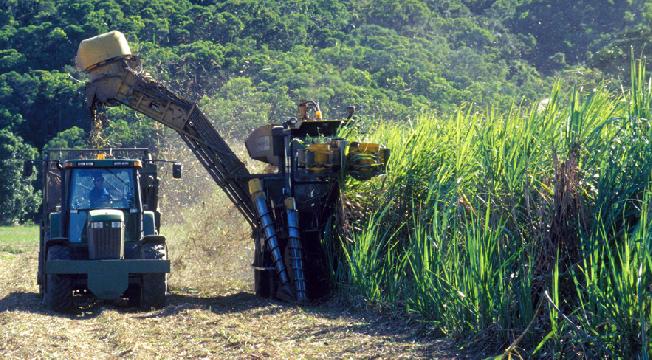 Sugarcane is an economically very important culture in Latin America, including Brazil. This country is one of the largest sugar producers, and is responsible for 35% (5.8 millions hectares) of the sugarcane culture in the world. In addition, the Brazilian alcohol program (Proalcohol) is an important alternative to fossil fuels, which makes the country to save approximately 260,000 barrels of petrol per day. Brazilian sugarcane varieties can grow with low addition of nitrogen fertilizers; nevertheless, this culture still consumes 240,000 ton of nitrogen per year, which represents high cost and also contributes to ground water pollution and atmospheric problems through release of NH3 and NO2 (Döbereiner et al., 1995).
As early as 1975 - during the world oil crisis - Brazil developed and implemented what became the world's most extensive programme to date for replacing conventional fuels in its Proalcohol programme; for a time, up to 80% of the nation's cars were fuelled by ethanol from sugar cane. At an annual production of twelve to fourteen million cubic metres, Brazil is still the world's largest producer and consumer of ethanol. Although the number of alcohol-driven vehicles fell drastically during the nineties, there has been increasing interest for cars launched onto the Brazilian market a year ago that can run on ethanol, conventional octane-based fuel or both in any mixture.
 In 2005, the national production of sugarcane had an increase of 4,85% in relation to the previous year, reaching 436 000 000 tons, what can be credited to the prices behavior of alcohol and sugar. In the state of São Paulo, main national producer, with about 57,69% of the country production, had a 5,1% growth, totalizing 251 528 400 tons. Seven of the 10 bigger producing cities of Brazil, belong to this Unit of the Federacy. The main Brazilian producing city is Morro Agudo, situated in the northeast region of the state.
The area planted with sugarcane in Brazil increased of 5,625 million hectares, in harvest 2004-2005, for 5,877 million hectares, in harvest 2005-2006, continuity to a trend that comes verifying in the last ten years. In this period, the planted area grew 28.9% and the production increased 43,8%.
 The sugarcane is the second culture, in terms of production value, and comes gaining new investments in the last years. The recovery of the alcohol price was stimulated in reason of a better demand of the flexfuel (gas/alcohol) cars. Another important fact: the alcohol combustible exportations had been greater than industrial alcohol for the first time in history, corresponding about 60% of the total. In respect to the external sector, seeming favorable to the Brazilian product safeguard the World Trade Organization (WTO) acted against the subsidies granted in European Union (UE) for the sugar exportation, contributing for this positive picture.