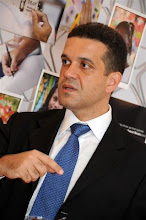
Petrobras Research Center

PETROBRAS (BOVESPA: PETR3 - PETR4) WAS FOUNDED IN OCTOBER OF 1953 TO OPERATE IN THE BRAZILIAN OIL SECTOR. The company has become the country's leader in the distribution of oil products and is internationally acknowledged as one of the largest major oil companies in the world today, leading the sector in the implementation of the most advanced deep-water technology for oil production.
PETROBRAS operates in a large number countries around the world. CENPES *, the PETROBRAS research center, uses and develops advanced technologies and is internationally renowned for its expertise. CENPES Basic Engineering division play a fundamental role inside all areas in PETROBRAS making Brazil one of the leading countries in oil industry technology.
The Cenpes consolidated itself as the largest Research Center in Latin America, the winner of the top prize in the world oil sector, the Offshore Technology Conference, in recognition of its remarkable contribution to the advance of deepwater production technology. Petrobras now allocates 1% of its gross income to the Center, and, thus, is among the companies that invest the most in research and development in the world.


* Petrobras Research and Development Center coordinates all technology development needed by Petrobras. Its main investigation lines include exploration (very deep waters) and production, industrial research, basic engineering and analytical chemistry. Cenpes will present the Ocean laboratory, a deep water simulation tank, together with the Federal University of Rio de Janeiro, and a chemical process for producing DME (dimethylether) directly from the synthesis gas, together with the National Institute ofTechnology.
With more than 1,500 employees over an area of 122,000 square meters, the Cenpes has 30 pilot units and 137 laboratories that attend the Company's agencies. The technologies the Cenpes has developed have resulted in 950 applications for international patents and 500 for Brazilian patents, in addition to a considerable number of registered trademarks.
The force of games
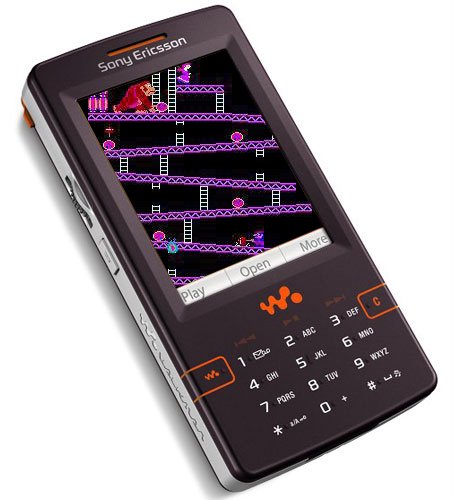
A Stock Exchange Application or a Store Management interface in the near future. So powerfull and user friendly than any other that you have ever seen, operated by the mobile phones.
In spite of that, there is a new generation of entrepreneurs whom discovered to gain money with that market behavior change that occured in the last 10 years. Their work is to invent new features for a younger public, between 16 and 28 years, that like to play, to download music or to order messages for the mobile devices.
Their products had growth to a US$ 250 million profit to the operators on mobile telephony in this year. Of this total, it is calculated that those SMEs companies raised US$ 75 million. Five years ago, only a few companies (10, almost in academic area and universities) existed creating this type of content. Today, they are already about 120 in Brazil. And there are more people entering in the branch, also foreign ones, that sees Brazil as a promisse field for this kind of business.
Quantum Computation
 Project Giga is a large-scale networking testbed including many, varied activities, such as grid software and applications. In a paternship between RNP (Brazilian NREN), CPqD (telco industry R&D centre in Campinas, SP) and R&D community in industry and universities to support R&D subprojects in optical and IP networking technology and advanced applications and services.
Mobile Ubiquitous
Brazil will overtake Japan in 2007, rising to 4th in the world with under 25s responsible for the majority of the 10 million new subscriptions.
Nokia, greater manufacturer of mobile devices of the world, said in the last month that waited that the mark of the two billion world mobile market was reached in the last quarter of the year. The Finnish group was responsible for 31,9% of sells of mobile phones in the second quarter, followed by the american Motorola (17,9%) and for the korean Samsung (12,8%), acording to Gartner.
Despite rising ownership levels, mobile revenues are in decline. As ownership in the $12 bn annual mobile market rises, ARPU is falling - from $16 pcm in 2004 to $10.4 pcm in 2007. Prepaid accounts for the majority of new subscriptions.
In Brazil, the August month registered a growth of 2 million to the users base, totalizing 78 million subscribers of Mobile Personal Service (SMP) in all the domestic territory. It was as the bigger number of qualifications of the year, only inferior to the registered one in May, according to National Agency of Telecommunications (Anatel). In the year, they had been registered 13.341.755 new qualifications.
The pay-paid terminals continue to gain space. Of the total of mobile accesses in service, 81.18% are daily pay-paid. The teledensity, international index that points the number of cellular in service with respect to each group of one hundred inhabitants, went up for 42,85, an increase of 2,96% in relation the July and 16,98% in relation the December of 2004.
Data usage is on the rise, contributing under $1 to ARPU in 2006, although this is predominantly SMS (a $700 million a year market).
Data contained in the report on: Vivo (Telesp Celular,Tele Centro Oeste, Tele Leste Celular, CRT Celular, Tele Sudeste), TIM (Tele Celular Sul, Tele Nordeste Celular), Claro , Oi Cellular, Amazonia/Telemig, Brasil Telecom, Telefonica.
Brazilian Innovation Agency - FINEP
 Financiadora de Estudos e Projetos — FINEP (Research and Projects Financing), also known as the Brazilian Innovation Agency, is a publicly owned company subordinated to the Ministry of Science and Technology — MCT. It was founded on July 24, 1967 with the purpose of financing scientific and technological research and graduate courses in Brazilian universities and research institutions, as well as research and development in companies. In 1971, FINEP became the Executive Secretary of the newly created Fundo Nacional de Desenvolvimento Científico e Tecnológico — FNDCT (Funding for Scientific and Technological Development).
 Since its foundation, FINEP has had a double role: it provides grants to non-profitable institutions, such as universities and research centers, and it lends money to companies. FINEP has encouraged intense mobilization in scientific and business circles, funding the implementation of new research groups, the creation of specific programs, the growth of science and technology infrastructure, and the institutional consolidation of post-graduate activities. It has also stimulated the increase in supply and demand for technology, by mobilizing universities, research centers, consulting firms and contractors of services, products, and processes.
In recent years, FNDCT was reinvigorated with new sources of funds from the so-called Science and Technology Sectorial Funds. The ability to finance the entire Science, Technology, and Innovation – S, T&I system – by combining reimbursable and nonreimbursable funds, as well as fiscal incentives, has afforded FINEP a great capacity for inducing activities aimed at developing this field, essential in increasing Brazilian manufacturing industry’s competitive edge.
S&T initiatives by business in partnership with universities, economically very successful, are also associated to FINEP funding, such as: the development of the Tucano aircraft by Empresa Brasileira de Aeronáutica – Embraer (the Brazilian Aeronautics Company), the forerunner of the company’s aircraft as important items in the country’s list of exports; numerous projects by Empresa Brasileira de Pesquisa Agropecuária — Embrapa (the Brazilian Agriculture Research Corporation), essential for the technological development of the Brazilian agricultural and cattle raising system, currently one of the most competitive in the world; Petrobras (the Brazilian Oil Company) projects, responsible for contributing towards mastering technology for deep-water oil exploitation, which has put the country on the way of self-sufficiency in this field.
FINEP
Praia do Flamengo 200 – 13º andar
CEP 22210-030 - Rio de Janeiro - RJ
Phone (+5521) 2555-0555
Fax (+5521) 2555-0509
E-mail:mailto:seac@finep.gov.br
Brazilian Agricultural Research Corporation

Embrapa, a state-owned company that operates in agricultural research is a strong ally of Brazilian farmers and livestock keepers when the subject is cost reduction and greater productivity. Last year alone, an estimated US$ 3.7 billion was saved through the use of varieties that reduced the use fungicides and insecticides, and methods that increased crop performance and product quality. For every US$ 1 invested in agricultural research, the return was US$ 14.
Investment in new technologies is, in reality, one of the reasons for the agricultural boom in the country. Brazil rose from a production of around 58 million tonnes of grain in the 1980's to 123 million tonnes last year. One fact that goes to show the fundamental part agricultural research played in the process is the fact that production rose more than the cropland. Whereas the number of hectares cultivated rose 10%, the volume of grain collected rose 111% in the period.
Embrapa agricultural research work, the largest worldwide in the area, is supported by a highly qualified team, including 1,257 researchers with doctorates, 905 with masters degrees, and 50 graduates. Their work is offered to farmers and livestock keepers for free. The company expenses are low if the benefits are considered. The federal government is going to invest over US$ 72 million on Embrapa this year. The government priorities are bio fuel research and forestry production.
Excegen Genética
 The Excegen Genética (MG) considers a new method of productivity increase in the bovine culture that will be able to represent an annual profit in the order of 150 thousand tons of meat for the Country. The basic way to change the genetic flock constitution, is being promoted by its improvement on the election of animals that will be the parents of the next generation. The genetic merit evaluation of the animals is being held by analysing the external appearance, the individual performance, or mixing models have been used to direct crossings.
These systems are capable of errors on the interpretation and probability, having consequence on the loss of efficiency of the process. The advance on the genetics became possible to pursuit beyond the appearances and searching in the DNA of the animals the necessary information. This new technology calls Election Attended Markers (SAMPlus®). The election of more productive bovines, attended for molecular markers, is an emergent technology, in Brazil and in the world. The Excegen is distinguished as pioneer in this field.
* Adress: Av. José Cândido da Silveira, 2.100 sala 13 - Horto CEP: 31.170-000 Belo Horizonte Tel.: (31) 3486.1733 Fax: (31) 3486.1619 E-mail: excegen@biominas.com.br
 Kero-Coco coconut water is filtered and sterilized*. Its natural composition with low calories maintains all nutrients of the purest coconut water. Not being a product derived from wheat, it does not contain gluten, and not being a product of animal origin, does not contain cholesterol.
Kero-Coco is the ideal drink to quench the thirst and to recover the body hydration in all situations of energy loss.
It is packed in modern, practical, aseptic and recyclable Tetra-Pak packages, that maintain the product up to 8 months, without refrigeration.
Kero-Coco is also exported to several countries of Latin America, USA, Europe, Africa, Caribbean region and Asia, that may now enjoy its nice flavor
*presence of INS223 oxygen inhibitor
Akwan Information Technologies
Google informs that the purchase of the Brazilian company increases its efforts of engineering and conscription in all Latin America. The new regional center of R&D will be sixth of the American site, that today has units of research in Tokyo (Japan), Zurich (Switzerland), Bangalore (India) and New York and Mountain View (U.S.A.). Google intends to contract new talents in Brazil and other countries of Latin America for the new center of research.
Vacants for the company are opened in the site www.google.com.br/jobs
* Akwan Information Technologies is a Brazilian company of solutions in information technology. Hosted in Belo Horizonte, Minas Gerais, was founded by Professor Nivio Ziviani. Ziviani is Ph.D. in Computer science for the University of Waterloo, Canada. He is Titular Professor of the UFMG Department of Computer Science, where he co-ordinates the Laboratory for Information Treatment (LATIN). He is co-founder of the Miner Technology Group, that was sold for the Group Folha/UOL in June of 1999, and Akwan Information Technologies, sold for Google Incorporation in July of 2005.
Brazilian Development Bank - BNDES
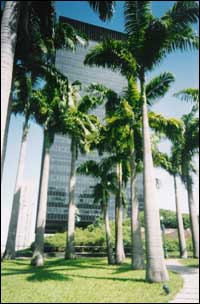 The Brazilian Development Bank - BNDES is a federal public company that is associated to the Ministry of Development, Industry and Foreign Trade, which has as an objective to long term financing of endeavors that contribute towards the development of the country.
This financing activity results in the Brazilian economy's improved competitiveness and in the increased quality of life of its population.
It also seeks to strengthen the capital structure of private companies and the development of the capital markets, the trade of machines and equipment and the financing of exports.
Since its establishment, in June 20, 1952, the BNDES has financed large industrial and infrastructure endeavors, having a significant position in the support to investments in agriculture, commerce and service and in micro, small and medium enterprises.
Another highlight is the support to social investments aimed at education and health, family agriculture, basic sanitation and collective mass transport. The BNDES considers it to be of fundamental importance, in the execution of its credit policy, taking into account ethical-environmental principles and is committed to the principles of sustainable development.
The financial support lines and the BNDES programs serve the needs of investments of companies of any size and sector, established in the country. The partnership with financial institutions, with agencies established around the country, allows the dissemination of credit, enabling greater access to the BNDES's resources.