Brazil is Latin technological innovation leader
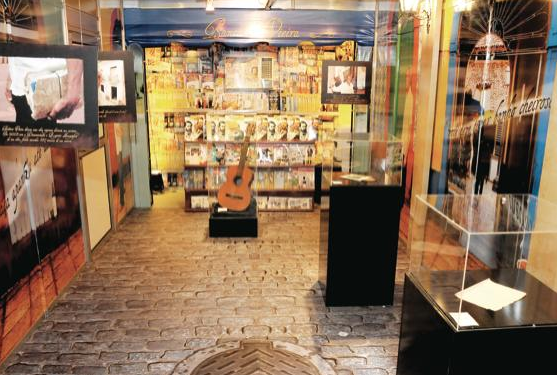
Beco do Vieira
iRadar Brazil

 Developed by Studio6 (Campinas/SP) the program uses the GPS iPhones 3G/3GS, cellular phone antennas and bases Wi-Fi to determine its location, and thereafter shows a list or map radar (fixed and / or phones), cameras, electronic speed bumps, road police and / or traffic lights next. In the preferences you turn on or off whatever you want.
Studio6
Rua Antonio Galizia, 181, cj. 62, Cambuí
13024-510, Campinas, SP
Tel.: +55 19 3294-7228
Brazilian Development Bank’s fund to invest in technology
IBM Bets on Brazilian Innovation
IC01 CHAIR

DESIGN André Lobo, Indio da Costa, Felipe Rangel | Indio da Costa Design | Rio de Janeiro – RJ
CLIENT Pnaples | Rio de Janeiro – RJ
THIS INNOVATIVE RENDITION OF A BAR CHAIR IS MADE FROM high-resistance recycled raw materials – discarded electronic products – and boasts a long life cycle. The IC01 ECO is manufactured from a single mold. It provides an alternative for the plastic furniture sector where there is an abundance of low cost and low quality products with doubtful design and very short useful life. The chair was conceived with a focus on features such as geometry, harmony and consistency. Its minimalist and timeless package was designed with the retailer in mind and consists of a recycled cardboard box that can fit five stacked chairs. MATERIALS: Recycled ABS. PRODUCT DIMENSIONS: Height: 572 mm. Width: 768 mm. Length: 484 mm. Weight: 3. 5 kg. PRICE: R$ 212. 00•
Natural Media

DESIGN Fred Gelli e equipe: Ana Camargo, Anderson Marcicano, Bruno Senise, Claudia Niemeyer, Fabrício Menezes, Felipe Caldas, Guido Paternó Castello, Luciana Moletta Tátil Design Rio de Janeiro – RJ
CLIENT Tátil Design Rio de Janeiro – RJ
THE CHALLENGE OF CREATING A NATURAL PIECE THAT WOULD SERVE as an invitation and a fl yer for the Design Naturally Workshop at the 55th Cannes Advertising Festival and customized to suit the event’s philosophy resulted in this innovative and eco-friendly media designed on laser engraved dry tree leaves. From animals to ballet dancers, from hamburgers to airplanes, all images were recordedon a leaf together with the event information – date, time and venue The same kind of media was used during the election campaign of mayoral candidate for the Rio de Janeiro City Government, Fernando Gabeira, in 2008. Designed with low environmental impact and showing great visual and sensory appeal, the leaves must be viewed against the light and can be returned to nature. Laser engraving allows for the use of images of different complexity levels and myriad of effects without leaving chemical residues. The project reinforces the idea that it is possible to design attractive and innovative graphic pieces while highlighting environmental issues. MATERIALS: Dry tree leaves. PRODUCT DIMENSIONS: Various sizes. Weight: 10 g•
Bossa Nova Exhibition
 ENVIRONMENTS
DESIGN Marcello Dantas Mag+ São Paulo – SP
CLIENT Banco Itaú São Paulo – SP
THE MAIN GOAL OF THIS EXHIBITION WAS TO PROVIDE AN OVERVIEW of the Bossa Nova era and its artists by using audiovisual and interactive media technologies. The exhibition was held at the Oca Pavilion in São Paulo’s Ibirapuera Park between July and September 2008, and attracted 120, 000 visitors. Each space within the exhibition had its own setting depicting a direct link with a given artist or moment in history. A holographic fi lm showed Bossa Nova singers and instrumentalists who had never performed together doing a rendition of The Girl from Ipanema. From a reclinable sofa with built-in loudspeakers one could watch a film projected on the dome, showing a bird’s eye view of Rio de Janeiro. The discography of the Bossa Nova movement was played in jukeboxes scattered around the exhibition, while visitors could check out LP covers and different versions of Bossa Nova hits. The atmosphere of the famous Copacabana Beach in Rio de Janeiro, the cradle of Bossa Nova, was conveyed to the Oca Pavilion through the Portuguese limestone pavement typical of Copabacana and the sand brought from the beach. An audio system provided visitors with quality sound on all fl oors where performances were being held•
Heroes Sports Wheelchair
 STUDENTS
DESIGN Jairo da Costa Junior Universidade do Vale do Itajaí Itajaí – SC
CLIENT Academic
THIS LINE OF SPORTS WHEELCHAIRS WAS DEVELOPED TO ALLOW wheelchairers to play sports such as frescobol (Brazilian beach tennis), discus throw, badminton, rugby and volleyball in different locations. The challenge confronted by the project was to meld together design, ecoefficiency and accessible costs. The purpose is to promote social inclusion by contributing to raise the self-esteem and personal worth of the physically challenged. In Brazil, nearly 15% of the population have some form of physical disability, whereas 8 million have a motor handicap. The design of the chairs is geared towards fulfilling specific tasks and draws on the symbolic figures of comic book heroes, such as Xavier and Demolition Man, and even Mark Zupan, captain of the US quadraplegic wheelchair rugby team. The models come in different colors and include HEROes Zupan, HEROes Daredevil and HEROes Xavier. The project honors universal, sustainable, adaptable, culturally accepted and socially fair design. MATERIALS: Recycled aluminum. PRODUCT DIMENSIONS: Height: 850 mm. Width: 800 mm. Length: 1, 050 mm. Weight: 14. 5 kg. PRICE: R$ 3, 620. 00•
Brazil takes off | The Economist

Simetria Line
 HOME LIVING
DESIGN André Lobo, Indio da Costa, Jorge Gomes Indio da Costa Design Rio de Janeiro – RJ
CLIENT Fabrimar Rio de Janeiro – RJ
THIS PREMIUM LINE OF CHROME-PLATED BATHROOM FIXTURES is characterized by its unique forms and comprises five different products: Bench faucet and mixers, wall faucet and mixers, shower hoses, hand douche and hygienic douche. All products feature an elliptical profile with rounded corners that differentiate them from other competitors in the market. MATERIALS: Chromed metal. PRODUCT DIMENSIONS: Various sizes. PRICE: Various prices•
Elite Squad

MOVIE
DIRECTOR Jose Padilha
PRODUCERS José Padilha | Marcos Prado | Zazen Produções | Rio de Janeiro – RJ
WRITERS Bráulio Mantovani | José Padilha | Rodrigo Pimentel | Rio de Janeiro – RJ
DISTRIBUTOR Universal Pictures | Brazil
ELITE SQUAD (PORTUGUESE: TROPA DE ELITE) IS A 2007 BRAZILIAN CRIME FILM DIRECTED by José Padilha. The film is a semi-fictional account of the Special Police Operations Squad (BOPE), of the Rio de Janeiro Military Police, analogous to the American SWAT teams. It is the second feature film and first fiction film of Padilha, who had previously directed the documentary Bus 174. The script was written by Bráulio Mantovani and Padilha, based on the book Elite da Tropa. The movie is based on Elite da Tropa, a book by two BOPE policemen, André Batista and Rodrigo Pimentel, together with sociologist & anthropologist Luiz Eduardo Soares, which provided a semi-fictional account of the daily routine of the BOPE as well as some historical events, based on the experiences of the two BOPE policemen. The book was controversial at the time of release, in its description of the BOPE as a "killing machine", as well as the detailed allegation of an aborted assassination attempt on then left-wing governor of Rio de Janeiro, Leonel Brizola, and reportedly resulted in Batista being reprimanded and censured by the Military Police. Elite Squad was an outstanding commercial success, and became a cultural phenomenon in Brazil. The film won the Golden Bear at the 2008 Berlin Film Festival.
Livraria da Vila Bookstore
 ENVIRONMENTS
DESIGN Isay Weinfeld e equipe: Alexandre Nobre, Domingos Pascali, Gustavo Benthien, Leandro Garcia, Monica Santoni, Wellington Diogo Isay Weinfeld São Paulo – SP
CLIENT Livraria da Vila São Paulo – SP
DESIGNED AS AN ANCHOR STORE FOR ONE OF THE MOST SOPHISTICATED commercial centers in the city of São Paulo – Cidade Jardim Shopping Mall – Livraria da Vila Bookstore occupies 2, 300 sqm on two fl oors. Opened in 2008, it boasts more than 200, 000 titles. Elements of the architectural project, such as the internal views created by the asymmetric design of the top fl oor, strengthen the concept of intimate environment. The bookshop features different spaces, enabling customers to retreat to a low ceiling area where they can sit in sofas or armchairs to read quietly or walk around in open areas. Three spaces within the store are connected by small bridges from the mezzanine fl oor leading to the main hall, which houses the auditorium, a classical music and jazz CD section, and an area for book launches. Two yellow stairways enable vertical circulation of customers. A Santo Grão Café outlet is also located within the store. Children have a specially designated space and main hall, which houses the auditorium, a classical music and jazz CD section, and an area for book launches. Two yellow stairways enable vertical circulation of customers. A Santo Grão Café outlet is also located within the store. Children has public auditorium and space for activities. COMPOSITION: metal frame, glass, wood. DIMENSIONS: 2.300 m²•
ECOPERFORMANCE

HOME LIVING
DESIGN Electrolux Industrial Design Center Latin América Curitiba – PR
CLIENT Electrolux Curitiba – PR
THE LS12Q IS A HIGH-CAPACITY WASHING MACHINE WITH AN INNOVATIVE design that enhances its user-friendliness, economy and ecoefficiency in water and electricity consumption. Its line, shape and surface create a sense of balance and elegance. Solutions such as a removable swivel multi- dispenser, firm grip handles, clear instructions, specific washing programs and turbo drying – to ensure even drier clothes – are features designed to streamline use and meet a wide array of customer needs. Sensors regulate water volume according to load, and the Procel quality seal guarantees electrical efficiency. The silver-colored ABS plastic injection parts are the result of a less polluting manufacturing process than traditional paint. MATERIALS: Tempered glass top, ABS panel and soap dispenser; polypropylene drum with mineral load; dust painted zinced steel cabinet. PRODUCT DIMENSIONS: Height: 1, 030 mm; width: 660 mm; depth: 700 mm; weight: 52 kg. PRICE: R$1, 749 / US$1, 028•
Twin Line Faucet Filter
 HOME LIVING
DESIGN Ana Lucia de Lima Pontes Orlovitz, Luiz Moquiuti Morales Duratex S. A. São Paulo – SP
CLIENT Duratex S. A. São Paulo – SP
A BALANCED COMBINATION OF FAUCET AND FILTER ALLOWING THE same water source to serve two distinct purposes. The two water outlets have hinged fi ttings and are spaced from one another. The faucet fi lter is fi tted with a unifi ed device for smooth and gradual opening and closing. A lever fi tted with an accurate ceramic mechanism enables a ¼ turn movement. By displacing the lever to one side the faucet is turned on while the fi lter is activated by displacing the lever to the opposite side. The water is fi ltered through the innovative carbon block system which reduces chlorine taste and odor problems, and removes particulate matter. The product conforms to the Brazilian Institute of Metrology, Standardization and Industrial Quality (Inmetro) standards. Its fi nely tuned and straight line design is easy to use on a daily basis and fi lter refi ll replacement is a breeze, making it highly ergonomical. MATERIALS: Galvanized brass and chrome finish. PRODUCT DIMENSIONS: Height: 318 mm. Width: 160 mm. Diameter: 45 mm. Weight: 3 kg. PRICE: R$ 600. 00•
Advanced Education Group Building
 ENVIRONMENTS
DESIGN Ana Carolina Montenegro, Jair de Souza, Rita Sepúlveda Vinte Zero Um Rio de Janeiro – RJ
CLIENT Oi Futuro Rio de Janeiro –
THE MAIN CHALLENGE BEHIND THE ARCHITECTURE AND VISUAL DESIGN of the Advanced Education Group (Nave) building, a public high school and digital media technology factory, located in an Art Deco building in downtown Rio de Janeiro, was to make this facility as groundbreaking and dynamic as its educational proposal. The project combines different areas, such as space for temporary exhibitions, digital experimentation room, multimedia plaza, classrooms, circulation areas, reception desks, cafeteria, and restrooms. A suspended and transparent classroom acts as a continuous interconnection between people and the venue’s spaces. The building’s façade is the result of a large scale innovative spatial intervention that is modifi ed every three months through a public art project. The facility’s night lighting has a bright backlight effect. The interior of the building features a rich multimedia environment with all sorts of screens displaying images and sounds produced by the school’s 600 students. MATERIALS: Adhesive plotter wall and fl oor paper, steel plates and structures, industrial fl ooring, resin and lacquered wood furniture, LEDs, LCD screens, glass plates•
LINEAGE 1000

TRANSPORTATION
DESIGN Embraer São José dos Campos – SP e Priestman Goode Londres – Inglaterra
CLIENT Embraer São José dos Campos – SP
AS AN ULTRA LARGE EXECUTIVE AIRCRAFT, THE LINEAGE 1000 JET accommodates 19 passengers. One of the main challenges faced by Brazilian aircraft manufacturer Embraer was to develop a product that would meet the demands of a highly competitive luxury market and also the requirements for aircraft certification. The cabin includes five modular areas that can be configured according to customers’ needs featuring workstations, rest areas, meeting facilities, two lavatories, wide luggage compartment, entertainment system, storage compartment for food and beverages. Optionals like an extra lavatory, shower, sleeping berth with double bed, wi-fi technology and Internet access are also available. MATERIALS: Metal alloys and compound fiber materials i. e. carbon fiber, Klevar, etc. PRODUCT DIMENSIONS: Height: 10. 6 m; length: 36. 2 m; wingspan: 28. 7 m. PRICE: R$73. 1 million / US$43 million•
Kompact Hauling Truck
 COMMERCIAL & INDUSTRIAL
DESIGN Juliano Gheno, Tobias Bertussi Bertussi Design Industrial Caxias do Sul – RS
CLIENT Ciber Equipamentos Rodoviários Porto Alegre – RS
THIS ASPHALT PAVING PLANT ON WHEELS PROVIDES MOBILITY AND a more rational use of space. It is a revolutionary product in the road pavement industry as it can haul all the paving machinery ensuring their transportation to the roadwork site and allowing for the concentration of equipment in a single place according to the pace of roadworks. The Kompakt hauling truck offers direct benefi ts to the entire production chain by reducing costs, electricity consumption and working time. Its groundbreaking design complements its exemplary functionality in a market segment where aesthetic values tend to play a minor role in relation to functional matters. Field tests have shown that the perception of added value prompted by the design compels users to exercise greater care in operating the equipment, which helps to establish new values within its market segment. Furthermore, there is the added advantage of the product being transported to other continents in the form of a container. MATERIALS: Steel plates; axles, engines, ball bearings and other truck components predominantly made from steel and metal alloys. PRODUCT DIMENSIONS: Height: 14, 000 mm. Width: 25, 000 mm. Length: 35, 000 mm. PRICE: R$ 150, 000. 00•
A Study of Seven countries and Brazil
http://www.wilsoncenter.org/topics/pubs/brazil.innovation.sp.pdf
For countries seeking to build a dynamic, highly-competitive economy capable of sustainable, long-term growth, innovation—or the capacity to transform knowledge into new products and methods of production and service—has become the engine for national strategies of development. Seven of the world’s most notably innovative countries— United States, Canada, Ireland, France, United Kingdom, Finland and Japan—have recognized knowledge as a key element for improving productivity and competitiveness, as well as advancing social and economic development. Understanding how these countries have succeeded in applying policies, adapting institutions, and using economic incentives and instruments to construct knowledge-based economies was the purpose of an in-depth, ten-month research project, Mobilização Brasileira para a Inovação (Mobit – Brazilian Innovation Mobilization). Intended to translate statistics into discernable trends, identify patterns in the national innovation strategies of these seven countries, and establish guidelines of action for the Brazilian government, the Mobit project was the focus of a recent seminar coordinated by the Brazil Institute and Prospectiva International in conjunction with the Brazilian Agency for Industrial Development (ABDI).
Hosted and co-sponsored by the Institute for Advanced Studies (IEA) of the University of São Paulo on April 25, 2008, the conference featured a keynote address by the General Coordinator of the Mobit study and the Observatory for Innovation and Competitiveness, Glauco Arbix. A group of leading Brazilian researchers, economists, and public officials joined the discussion to debate the findings of the Mobit Final Report and analyze its implications for Brazil’s national innovation system. Paulo Sotero, director of the Brazil Institute, and César Ades, director of the IEA, provided introductory remarks. Participants noted that while Brazil’s innovation performance is fast improving—leading in deep-water oil exploration technology and in the production and use of renewable fuels—it is far from entering the ranks of top international innovators. This report synthesizes the findings of the Mobit study and the proceedings from the seminar.
The Challenge of Innovation in Brazil
For countries seeking to build a dynamic, highly-competitive economy capable of sustainable, long-term growth, innovation—or the capacity to transform knowledge into new products and methods of production and service—has become the engine for national strategies of development. Seven of the world’s most notably innovative countries — United States, Canada, Ireland, France, United Kingdom, Finland and Japan — have recognized knowledge as a key element for improving productivity and competitiveness, as well as advancing social and economic development. Understanding how these countries have succeeded in applying policies, adapting institutions, and using economic incentives and instruments to construct knowledge-based economies was the purpose of an in-depth, ten-month research project, Mobilização Brasileira para a Inovação (Mobit – Brazilian Innovation Mobilization). Intended to translate statistics into discernable trends, identify patterns in the national innovation strategies of these seven countries, and establish guidelines of action for the Brazilian government, the Mobit project was the focus of a recent seminar coordinated by the Brazil Institute and Prospectiva International in conjunction with the Brazilian Agency for Industrial Development (ABDI).
Hosted and co-sponsored by the Institute for Advanced Studies (IEA) of the University of São Paulo on April 25, 2008, the conference featured a keynote address by the General Coordinator of the Mobit study and the Observatory for Innovation and Competitiveness, Glauco Arbix. A group of leading Brazilian researchers, economists, and public officials joined the discussion to debate the findings of the Mobit Final Report and analyze its implications for Brazil’s national innovation system. Paulo Sotero, director of the Brazil Institute, and César Ades, director of the IEA, provided introductory remarks. Participants noted that while Brazil’s innovation performance is fast improving—leading in deep-water oil exploration technology and in the production and use of renewable fuels—it is far from entering the ranks of top international innovators. This report synthesizes the findings of the Mobit study and the proceedings from the seminar.